LoRaWAN® vs mioty®: Why the Future of IoT Connectivity Is Hybrid
Choosing between LoRaWAN® and mioty® depends on many factors, but did you know that you can also leverage the power of both?
You probably arrived here searching for 'LoRaWAN vs mioty”. But here's the reality:
The most forward thinking companies have already stopped asking that question. While the industry debates which protocol is “better”, we, at LORIOT see a different picture. Real innovation doesn’t come from choosing sides, it comes from combining strengths.
But, let’s put things in order first.
Both LoRaWAN® and mioty® have proven to be powerful LPWAN technologies for large-scale IoT deployments. LoRaWAN® excels in flexibility, ecosystem maturity, and accessibility, while mioty® stands out for its exceptional robustness and scalability in massive sensor networks. Besides, both operate in licence-free sub-GHz bands, which is why they are often evaluated side by side, even though their underlying technologies differ significantly.
Of course, not every use case demands both. Some applications benefit more from LoRaWAN® adaptability; others rely on mioty® resilience in challenging environments. And that’s precisely the beauty of IoT, it’s not about one-size-fits-all technology, but about choosing and combining what truly fits each need.
Quick Overview: LoRaWAN® and mioty®
In IoT, no single protocol can solve every challenge.
Think of LoRaWAN® and mioty® as tools in a toolkit: each excels under different circumstances.
Having multiple options at your disposal means you can tailor your solution to the environment, the scale, and the critical requirements of each deployment. LoRaWAN®, mioty®, or a hybrid approach? The right choice depends on the environment and the specific requirements of each deployment.
Let's have a brief review on each of them, without positioning one against the other.
1. LoRaWAN®: Flexibility and Solid Global Ecosystem
LoRaWAN® (Long Range Wide Area Network) is the network protocol designed specifically for the LoRa® (Long Range) communication technology. Its open standard and mature global ecosystem make it one of the most widely adopted LPWAN technologies for IoT.
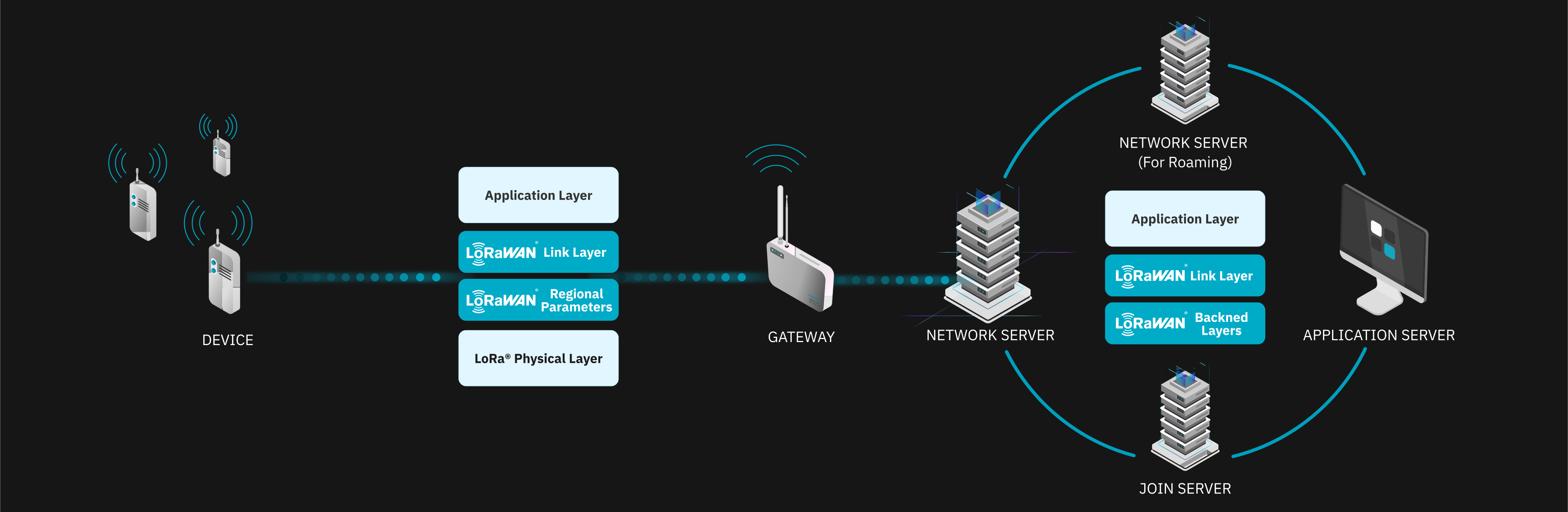
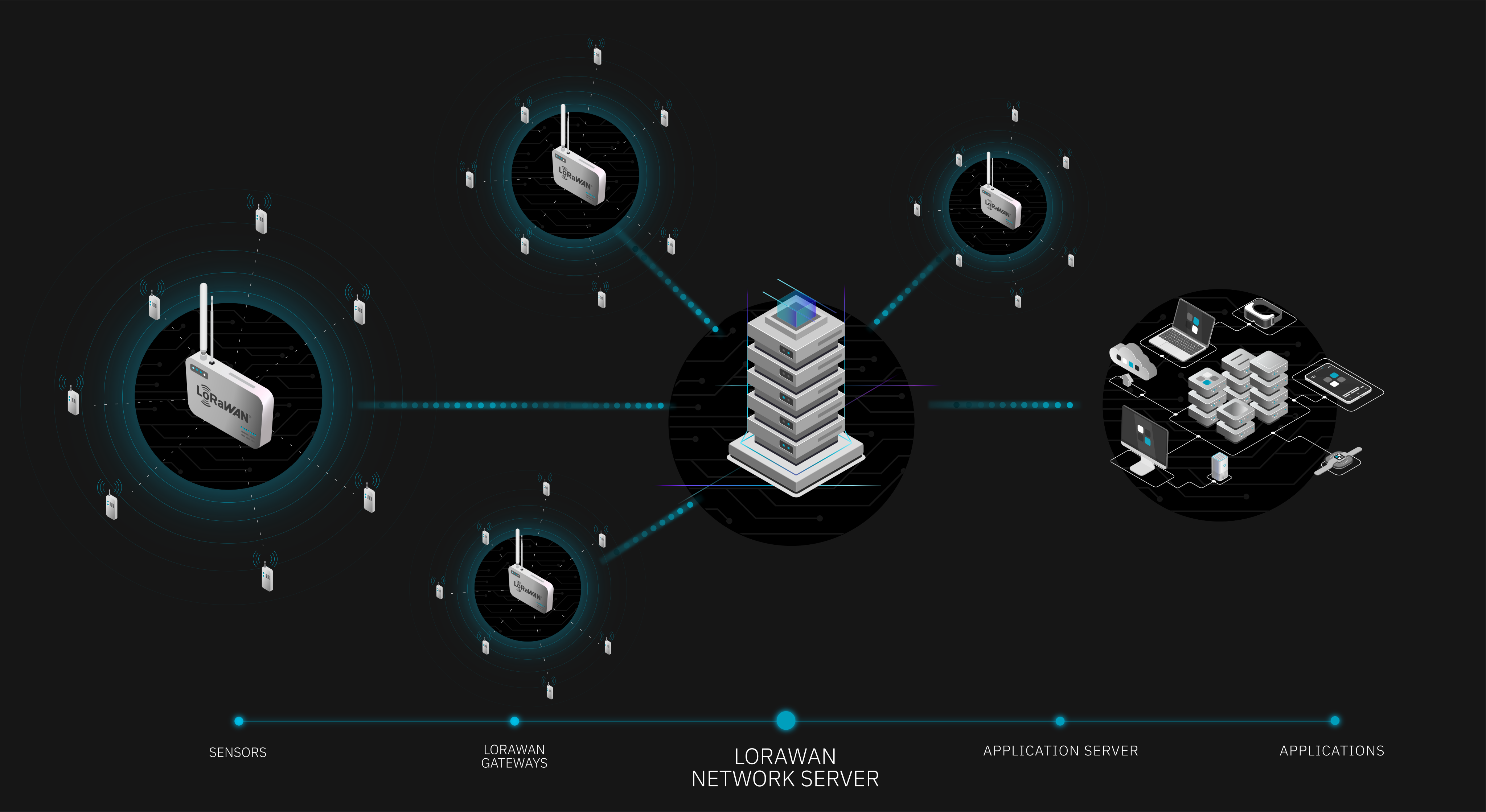
The protocol operates on a star topology, where battery-powered end devices communicate directly with multiple gateways using LoRa® modulation based on Chirp Spread Spectrum (CSS).
This technique sends data using frequency “chirps,” allowing long-range communication at very low power, a key advantage for IoT sensors deployed for years on battery.
Gateways act as bridges, forwarding messages to a centralized LoRaWAN Network Server. The server manages crucial functions such as decryption, authentication, and data routing, ensuring secure and reliable communication across large deployments.
LoRaWAN® also incorporates Adaptive Data Rate (ADR), a mechanism that dynamically optimizes data rates, transmission power based on network conditions. ADR improves network capacity and device battery lifetime, particularly in large and dense deployments.
This efficient and secure model has led to widespread adoption across smart cities, logistics, environment monitoring, and utility sectors.
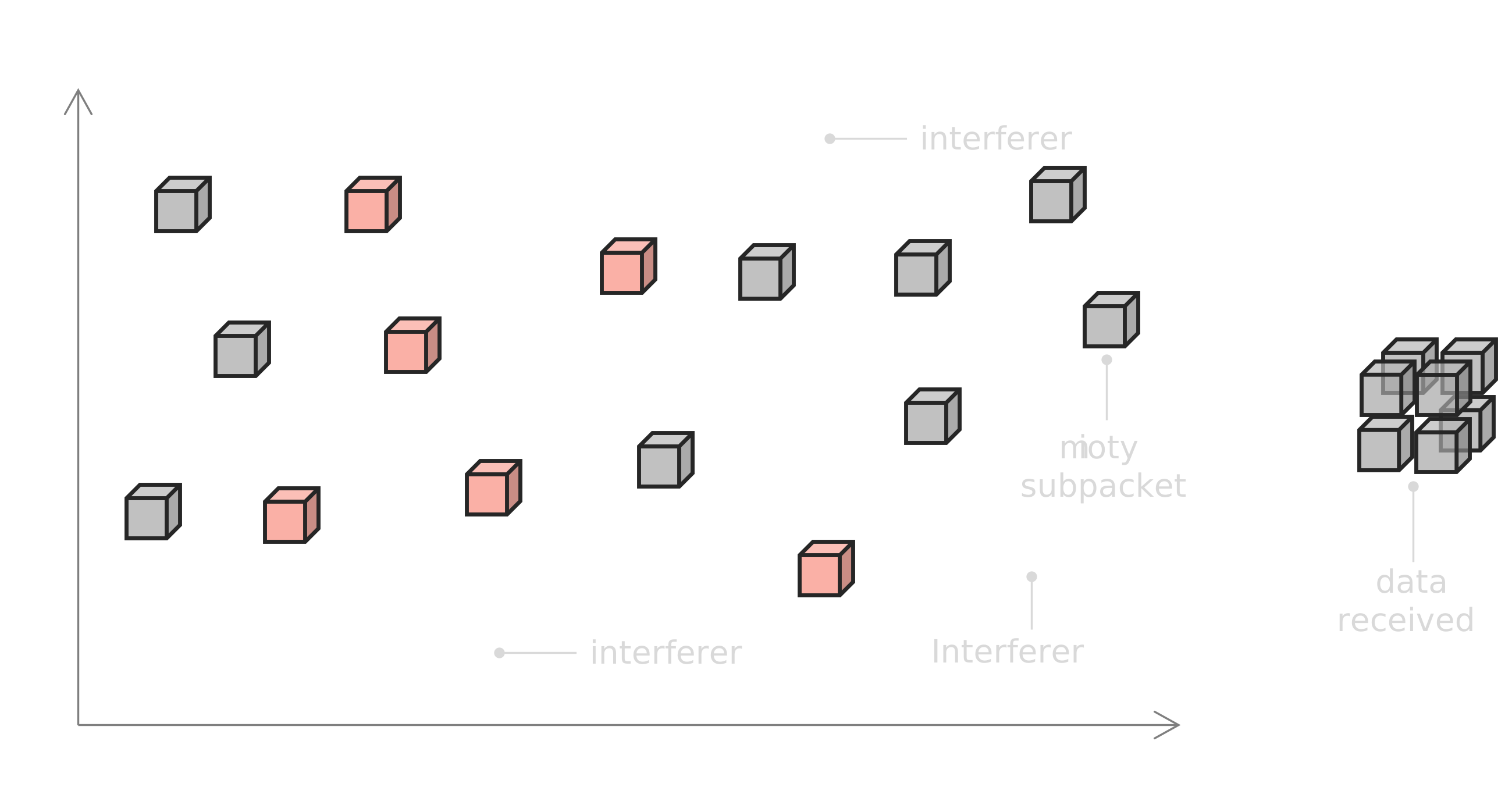
mioty® is a next-generation LPWAN protocol engineered for massive-scale IoT deployments that require high reliability and resilience, based on ETSI standard. Its core innovation, Narrow Band Telegram Splitting Multiple Access (TSMA), divides each data packet into smaller sub-packets transmitted across different time and frequency slots.
This approach ensures high immunity against noise and interference in a harsh environment. , where the original message can still be fully reconstructed.
This makes mioty® exceptionally robust in high-density environments, where thousands of devices may be transmitting simultaneously, or in industrial areas where radio noise is common. An additional advantage of mioty® is its ability to maintain reliable communication even at high mobility speeds.
Since sub-packets occupy very short airtime and are spread across the spectrum, the protocol achieves very high message throughput with minimal congestion, and performs consistently in fast-moving scenarios such as vehicle tracking or mobile industrial assets.
Once sub-packets reach the gateway, the message is reassembled at the base station level and then forwarded to the mioty® Service Center for further processing, enabling efficient handling of high volumes of parallel transmissions.
Thanks to this architectural robustness, mioty® has become a strong fit for industrial and process automation, smart metering for water, gas, and energy, and environmental or infrastructure monitoring in remote or harsh environments, scenarios where high reliability and the ability to scale dense device deployments are critical.
Its ability to operate reliably under dense transmission environments also makes it a future-proof choice for areas expected to see significant growth in sensor density, including mixed or third-party devices, or increased interference over time.
How LoRaWAN® and mioty® Differ in Their Technical and Ecosystem Profiles
LoRaWAN® and mioty® share a similar purpose in the LPWAN landscape, yet they are engineered very differently. Their underlying technologies and the ecosystems around them shape how and where each protocol delivers its highest value.
Protocol
Technical Peculiarities
Typical Strengths
Ecosystem Notes
LoRaWAN®
CSS modulation; LoRa Alliance specification
Flexibility, long range, low power, broad use-case fit
Very mature global ecosystem; extensive device/gateway availability
mioty®
TSMA technology; sub-packet transmission; supported by mioty Alliance based on ETSI standard
Extreme robustness in interference; high density; scalability
Strong industrial and metering presence; European-origin IP
These peculiarities do not make the protocols competing alternatives, but complementary options that become optimal under different environmental or operational constraints.
Hybrid LPWAN Connectivity: A Unified Model for LoRaWAN® + mioty®
IoT environments are rarely homogeneous.
As the IoT market scales, the complexity of deployments continues to rise, especially in the enterprise field. Leading organizations now manage millions of connected devices across diverse environments, from factories to logistics fleets and urban infrastructures.
This growth brings new challenges around interoperability, network management, and scalability. The hybrid approach, by combining LoRaWAN® and mioty® within a unified framework, directly responds to this need, enabling seamless integration of heterogeneous devices and networks under one system while reducing fragmentation and simplifying operations.
In practical terms:
A hybrid model allows organizations to run both LoRaWAN® and mioty® simultaneously, selecting the protocol that best fits the requirements of each use case, environment, or performance constraint.
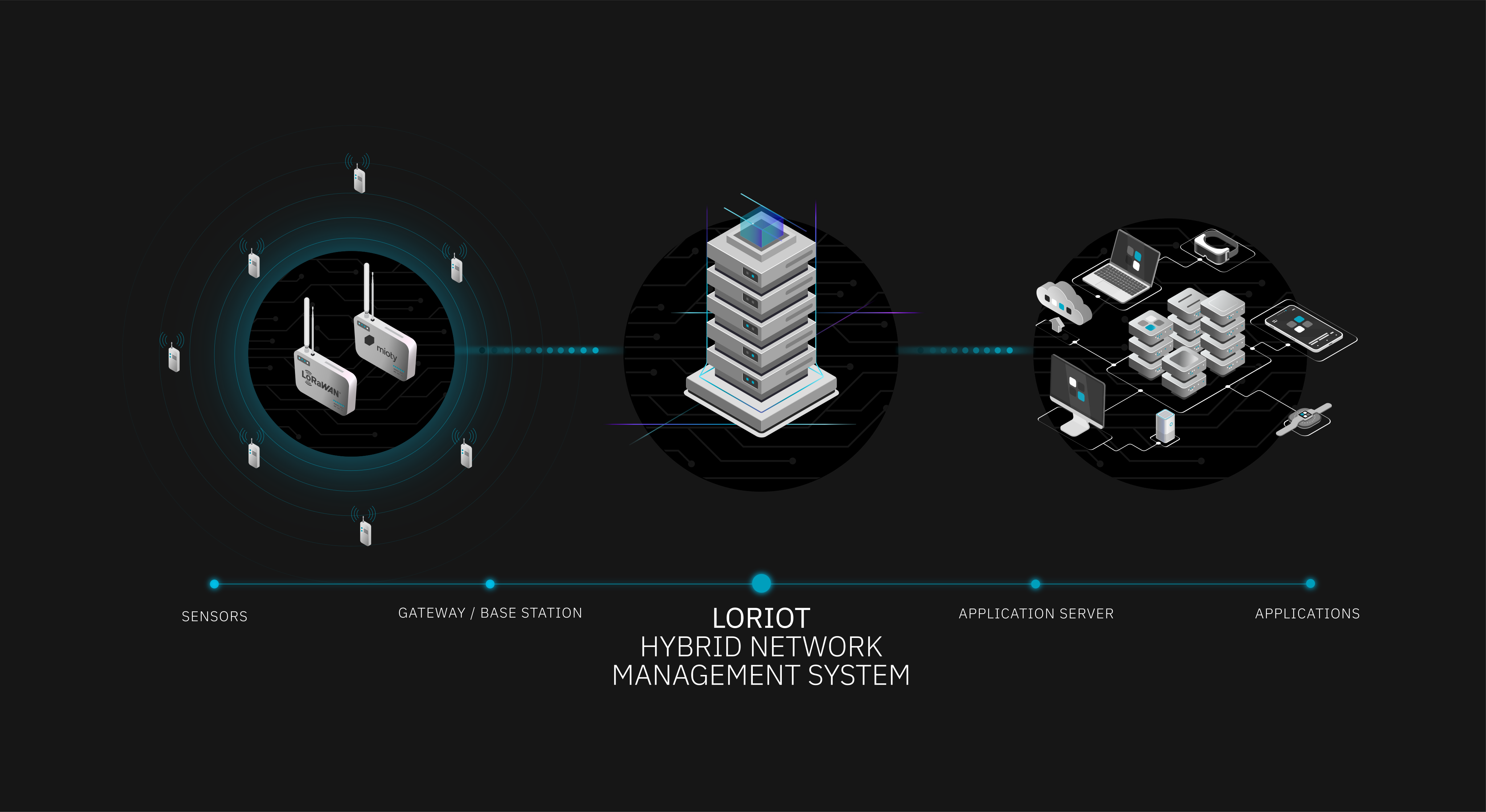
Devices operate within the same network environment but communicate through the protocol that suits them best, all managed from a single, unified platform.
This approach eliminates the need for parallel infrastructures, brings flexibility, efficiency, and optimizes the Total Cost of Ownership (TCO).
Examples of hybrid applications using LoRaWAN and mioty:
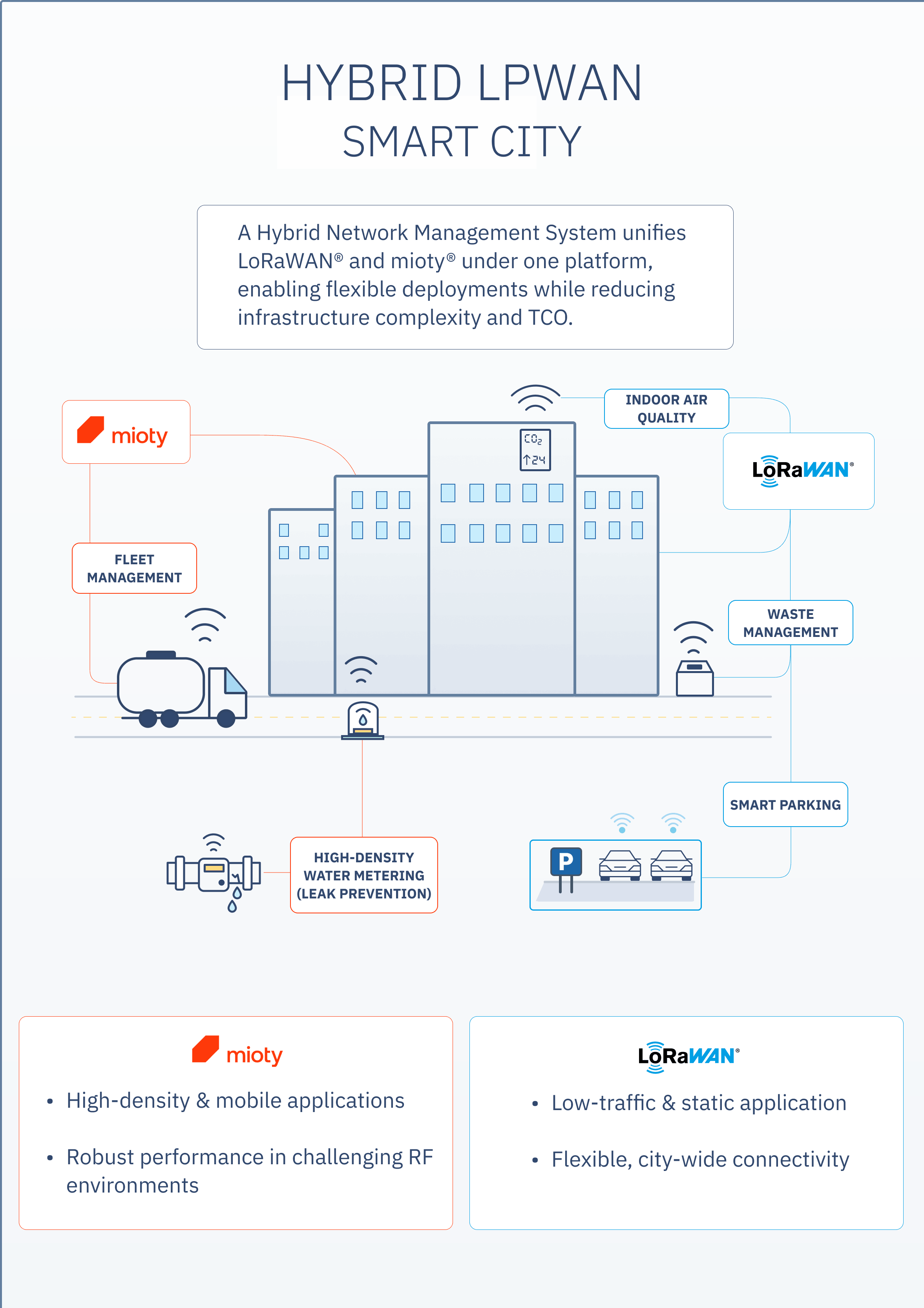
In a smart city scenario, low-traffic applications such as smart parking, air-quality monitoring, and waste management can reliably operate on LoRaWAN®, taking advantage of its flexibility and ecosystem maturity. At the same time, high-density water metering or fleet management solutions can be supported by mioty®, which offers greater robustness in interference-heavy areas and better performance for mobile or high-volume sensor networks.
Together, both technologies form a cohesive connectivity layer tailored to the city’s diverse operational needs.
Similarly, in an industrial environment, existing LoRaWAN® deployments used for predictive maintenance or process monitoring can seamlessly coexist with mioty®-based solutions in areas exposed to strong interference or requiring very high device density.
Instead of replacing one network with another, industries can selectively apply each protocol where it delivers the greatest operational value, maximizing performance while minimizing disruption and cost.
The shift toward hybrid connectivity is not limited to network platforms. The broader IoT ecosystem is already embracing this direction, with hardware manufacturers introducing hybrid LoRaWAN®–mioty® gateways that support both protocols natively.
Vendors such as Miromico and RAKwireless, long-standing partners of LORIOT, are actively developing devices designed to operate in dual-protocol environments. This growing availability of hybrid hardware further reinforces the market’s move toward interoperability and enables organizations to deploy mixed networks more efficiently and at scale.
Technical Benefits of using LoRaWAN® and mioty® together
When LoRaWAN® and mioty® operate within a unified environment, their complementary properties create a connectivity layer that is more resilient, scalable, and operationally efficient than relying on a single protocol.
This combined model allows organizations to optimize performance across diverse deployment conditions, ensuring continuity even as density, interference levels, or geographic requirements evolve.
Reliability and Latency Combining both protocols creates a more resilient network, mitigating performance drops in interference-heavy environments.
Spectral Efficiency Hybrid deployments allow message transmission to continue if one protocol experiences localized degradation, enabling a natural failover mechanism.
Protocol-Level Redundancy If one protocol experiences localized degradation, traffic can be rebalanced, ensuring uninterrupted service.
Unified Technical Management Layer Operating both technologies under one backend enables consistent configuration, monitoring, diagnostics, and troubleshooting across protocols.
Implementing a Hybrid Strategy: Best Practices
The importance of choosing the right approach was discussed in a webinar hosted by LORIOT featuring industry experts Liliane Paradise (Miromico) and Stefan Ereth (Fraunhofer ISS). As the speakers demonstrated, organizations adopting a hybrid LoRaWAN®–mioty® strategy are already seeing measurable advantages, including the following.
1. Future-Proof Connectivity Enterprises can expand or adapt connectivity requirements over time without replacing existing infrastructure.
2. Optimized Total Cost of Ownership Leveraging existing LoRaWAN® assets while adding mioty® where needed reduces deployment, maintenance, and operational costs.
3. Simplified Operations at Scale A unified management layer streamlines network oversight, planning, and lifecycle operations across diverse geographies.
4. Broader Device Ecosystem Access Supporting both protocols expands the available device portfolio and accelerates integration across verticals.
5. Enterprise-Grade Resilience and Scalability Hybrid architectures allow smoother scaling and higher service continuity across complex and evolving environments.
However, implementing a hybrid strategy requires more than simply operating two technologies side by side.
As the experts at the webinar noted, true hybridization demands interoperability at every layer.
The system should not behave like “two separate networks,” but as a single, unified infrastructure from sensor to cloud. This involves harmonizing payload formats, ensuring consistent device behavior, and maintaining a seamless data flow between both technologies.
Scalability is also a central concern. A forward-looking design means anticipating tomorrow’s density, not today’s device count. This mindset transforms hybrid IoT planning from a short-term technical decision into a long-term strategic one.
Finally, careful cost evaluation should guide every decision. Understanding which technology brings the best value for each use case, and reusing existing infrastructure where possible, can significantly reduce total cost of ownership while preserving flexibility for future upgrades.
For a deeper dive into the implementation best practices and technical insights shared during the session, watch the full webinar recording:
The LORIOT way: A Unified Connectivity Vision
At LORIOT, we've been pushing the hybrid approach for many years. Our decision to evolve from LoRaWAN®-only Network Management System to Hybrid Network Management System came from hearing the needs of our customers: they needed more connectivity alternatives, more flexibility for their use cases, and more options to support increasingly diverse and demanding IoT deployments.
Rather than choosing one protocol over the other, combining LoRaWAN® and mioty® enables organizations to capitalize on the strengths of each technology while building an infrastructure that remains relevant in the long term.
So, why choose one protocol over the other when you can combine them and build a future-proof infrastructure and optimize the total cost of ownership of your IoT project?
The IoT market is evolving rapidly, and what is true today may change in a short time. That’s why protocol comparisons, on their own, have limited value.
At LORIOT, this principle guides the design of our Hybrid Network Management System. Built for flexibility and interoperability, it enables secure, scalable, carrier-grade operation of both LoRaWAN® and mioty® within a single environment. Our platform allows organizations to choose the protocol, hardware, and application stack that best suits each use case, ensuring deployments that remain efficient, resilient, and ready to grow.
Also, as active members of both the LoRa Alliance and the mioty® Alliance, one of our objectives is to provide not only comprehensive and modern connectivity services, but also supporting the adoption and development of both LPWAN protocols.
“We choose to employ a hybrid approach, giving our current and prospective clients the option of selecting a transmission protocol, LoRaWAN® and/or mioty®, based on their specific use case, while operating their hybrid infrastructure from a single interface." Julian Studer, CEO and founder of LORIOT.
If you want to explore the benefits of hybrid LPWAN connectivity, you can create a free account on our public hybrid infrastructure.
Or, if your project requires guidance or tailored support, feel free to reach out to our team.
We’re here to help you build resilient, future-ready IoT networks, on your own terms.