Scaling IoT: 5 Practical Insights from a Decade in the Trenches
Real-world strategies and best practices drawn from LORIOT's hands-on experience taking IoT projects from pilot to full deployment
IoT, like many emerging technologies, has moved through the typical innovation curve, from initial triggers of innovation to an initial period of hype and inflated expectations. Today, the IoT market has reached a turning point where its potential can be realised on a large scale, but only if businesses approach implementation strategically.
However, scaling IoT solutions remains a complex challenge requiring careful planning, robust technology and a deep understanding of user needs.
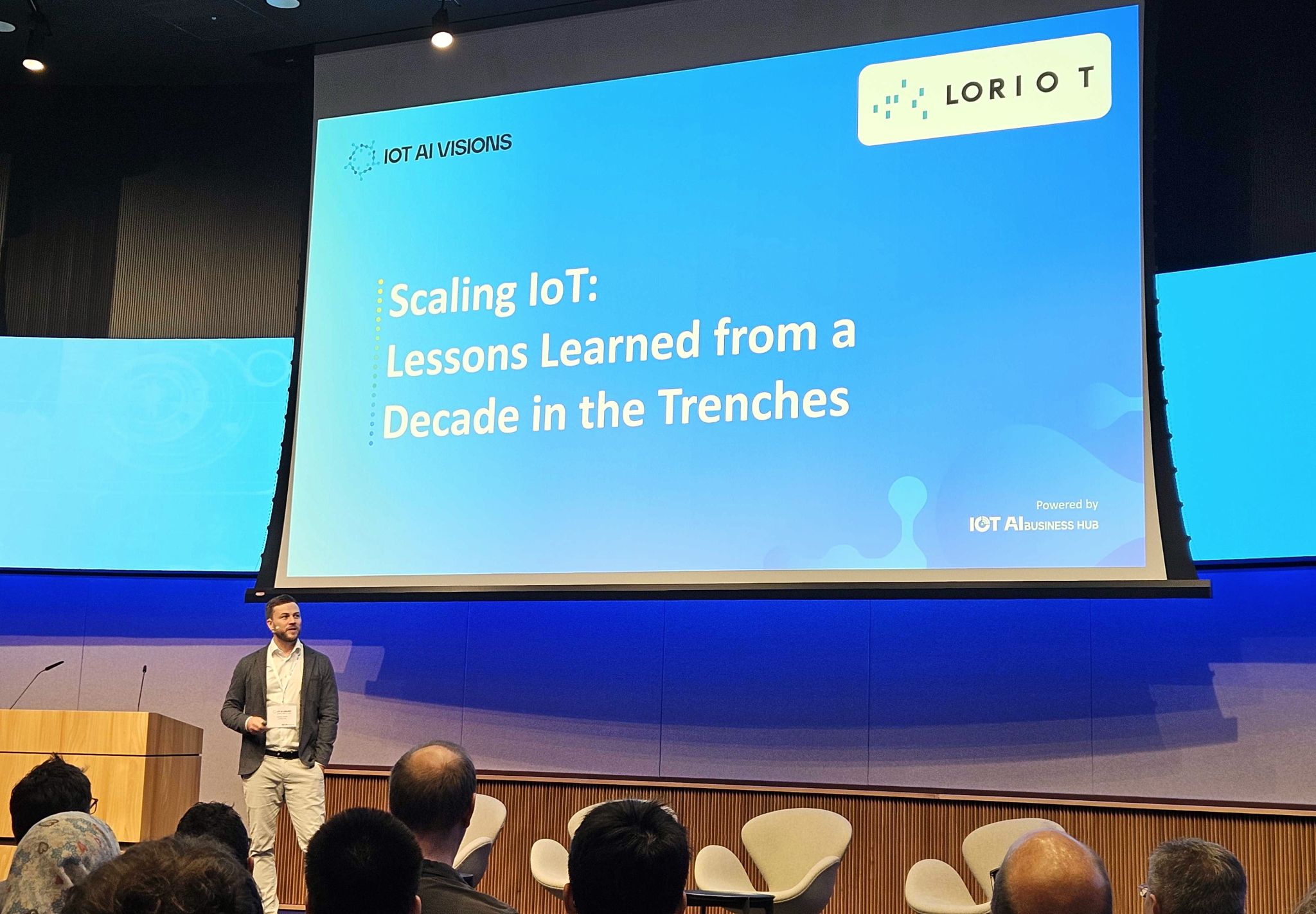
Over the past decade, LORIOT has worked closely with companies to implement and expand IoT projects, gaining deep, practical experience in what it takes to scale IoT successfully. This experience formed the foundation of the insights shared by Yannik Kopp, Chief Strategy Officer at LORIOT, during his presentation at IoT AI Vision 2025, where he reflected on ten years of hands-on work in the field.
As he explained, “what we have learned in this decade in the trenches, these lessons were learned by doing, because back then nobody had real experience.” This practical perspective shaped the key insights he shared with the audience.
Three realities define this landscape. First, digitalisation is a long-term process that takes time, even years, especially in larger enterprises. Second, scaling IoT use cases is complex and demanding, requiring careful planning, integration, and expertise. And finally, the development of the ecosystem and maturity of the product is a slow process. Together, these factors confirm that IoT is a long-term commitment, and the ideal time to start is now.
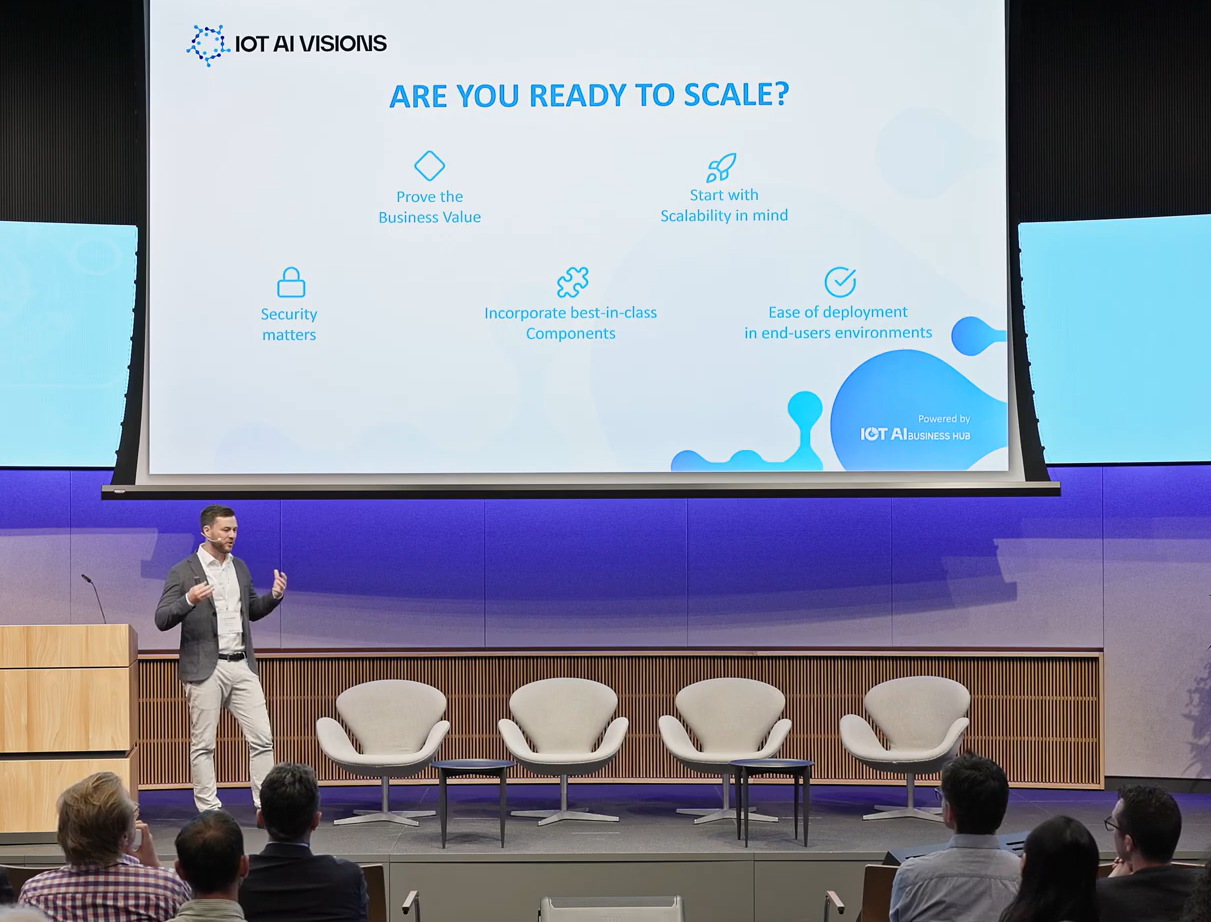
With this in mind, here are five expert insights that can help businesses address these challenges and scale their IoT projects successfully.
IoT solutions must evolve constantly to stay relevant, build loyalty, and maximise ROI.
Lesson 1: Start with a use case not the tech
One of the main reasons IoT projects struggle is that they begin on the wrong foot. Many companies start with technology instead of a real problem, and without a clear purpose it becomes difficult to justify, scale, or gain commitment to a solution.
Yannik warned about the consequences of failing to link IoT initiatives to measurable business value: "if you cannot show a return on investment, at some point your budget will be cut and then your project will fail."
The fix is straightforward: start with a specific, clearly defined problem or opportunity in day-to-day operations.
A concrete need provides direction, aligns stakeholders, and prevents teams from investing in solutions that are hard to justify. Once the problem is clear, the right technology will follow naturally. Digitalisation challenges are rarely caused by technology itself, but by organisational alignment, mindset, and user adoption, making people and processes just as critical as the technical solution.
Lesson 2: Your PoC (Proof of Concept) is not a product
Many IoT initiatives fail because early prototypes are treated as fully scalable solutions. This leads to problems when projects try to expand: issues with security, interoperability, data management, and a lack of skilled personnel.
Industry research shows that around 90% of IoT projects never reach full deployment, with many getting stuck at the pilot stage. These pilots may perform well with a small number of devices, but when faced with larger volumes, increased data flows, or more complex operational requirements, performance issues and architectural limitations quickly emerge.
Scalability must be built in from the start. Retrofitting solutions after a pilot phase almost never leads to successful large-scale deployment.
Businesses should anticipate growth early: what happens if there are 100 devices in the field? Or 1,000? Who maintains them? Addressing these questions upfront ensures smooth expansion, and choosing technologies and platforms built for efficient growth makes all the difference.
Lesson 3: Work with trusted and proven partners
For IoT projects to succeed, reliability is often more important than novelty. Bleeding-edge technologies can introduce instability, unexpected costs, and support challenges that derail initiatives. Selecting trusted, high-quality components and partners is essential.
LORIOT relies on a well-established network of experienced partners, providing stable technology that helps businesses minimise risk, avoid disruptions, and achieve consistent long-term performance.
As Yannik put it: "The real value of a partnership shows when things don't go as expected." Working with partners who can respond and adapt under pressure is what keeps IoT projects on track.
Lesson 4: Smooth onboarding is crucial
Complicated setups, confusing manuals, or complex configurations can frustrate users, increase support costs, and delay deployment. A poor first impression can quickly discourage adoption.
Making the initial setup as intuitive and frictionless as possible helps boost confidence, reduce errors, and encourage uptake from the very first interaction.
Provide clear, visual instructions where necessary, and test the onboarding process with real users to reduce friction and minimise training requirements. When additional guidance is needed, LORIOT offers structured training and hands-on support to help teams get up to speed efficiently.
Lesson 5: Continuously add layers of value
IoT solutions cannot remain static if they are to deliver lasting impact. "Set it and forget it" approaches lead to stagnation as user needs evolve and competitors advance. Data that is not used effectively represents missed opportunities.
By continuously enhancing a solution, companies can build customer loyalty, create new revenue streams, and maximise ROI. This requires actively listening to users, analysing IoT data for insights, and maintaining a plan for regular improvements.
Thinking beyond the initial deployment is what transforms a simple tool into an indispensable platform.
Successfully scaling IoT demands more than technology. It requires strategic planning, user focus, and thoughtful execution.
The most successful projects treat IoT as an evolving ecosystem, continuously adapting to new needs and opportunities. Companies that approach it with this mindset are the ones that unlock long-term value and turn connected technology into a genuine competitive advantage.
Watch Yannik's full IoT AI Vision presentation in the video below.