How Artificial Intelligence is accelerating the Internet of Things
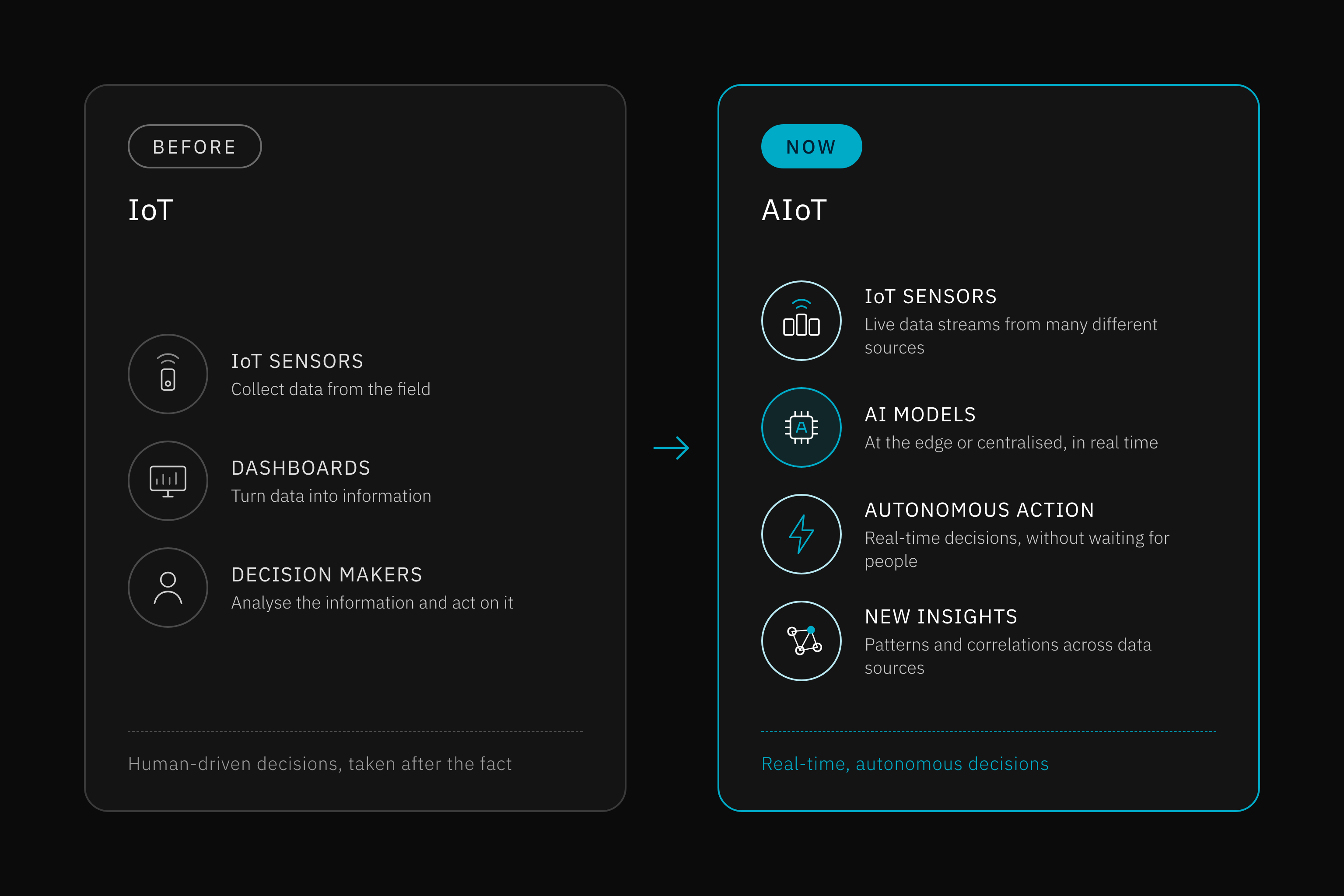
The Internet of Things (IoT) has enjoyed steady growth over the last decade, successfully blanketing industries with sensors and connecting physical devices to the internet. However, the explosive rise of Artificial Intelligence (AI) has acted as a massive catalyst, transforming IoT from a simple data-collection network into an intelligent, autonomous ecosystem.
IoT was doing well on its own, but AI has given it a renewed, urgent purpose. The synergy is simple: AI models require massive amounts of real-world data to learn and act, and IoT serves as the "eyes and ears" to provide it.
The data imperative: Why AI needs IoT
AI outcomes are only as good as the data they consume. While generative AI models can be trained on scraped internet text, applied AI, the kind that interacts with the physical world, requires continuous, high-quality, real-time data.
A predictive model trained solely on historical data is virtually blind to sudden changes in the physical world. By deploying billions of connected sensors globally, IoT bridges this gap, feeding AI continuous streams of live data so it can perform real-time inference and make accurate decisions. Without IoT, AI is confined to digital tasks; without AI, IoT is just a massive collection of untapped data.
Image Credit: LORIOT
Application focus: The Smart City Ecosystem
The smart city is a perfect example of this convergence. To build a truly smart infrastructure, city planners cannot rely on static algorithms. They must feed real-world data into an AI model.
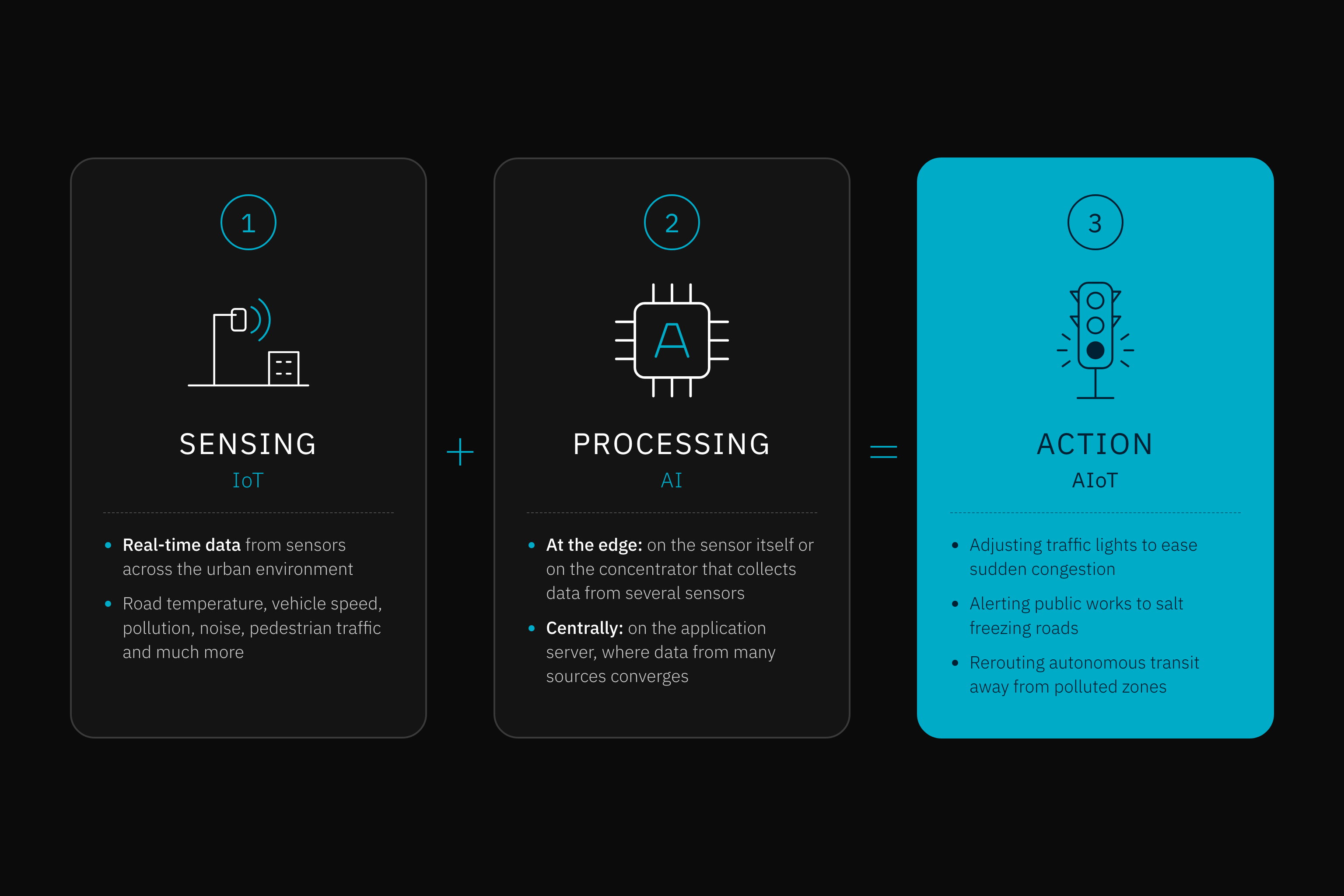
In a modern smart city, IoT and AI work in a continuous feedback loop:
Sensing (IoT): Sensors placed across the urban environment gather real-time data on road temperatures, ambient pollution levels, vehicle speed, noise, pedestrian traffic, and many other different data points.
Processing (AI): This raw data is fed directly into an AI model. Data analysis can take place at the edge—directly on the sensor that captures the data, or on the concentrator that collects data from multiple sensors before sending it to the server—or centrally on the application server, where data from multiple sources and of various types converges.
Action (AIoT): The AI analyzes the patterns and autonomously takes action—such as dynamically adjusting traffic light timings to ease sudden congestion, alerting public works to salt freezing roads, or rerouting autonomous transit to avoid highly polluted zones.
Image Credit: LORIOT
Market evidence: The rise of "AIoT"
The combination of these two technologies has birthed a new, rapidly accelerating sector known as the Artificial Intelligence of Things (AIoT) or, more recently, Physical AI. Evidence of this correlation is strongly reflected in the massive financial investments and market forecasts mapping AI's impact on IoT expansion.
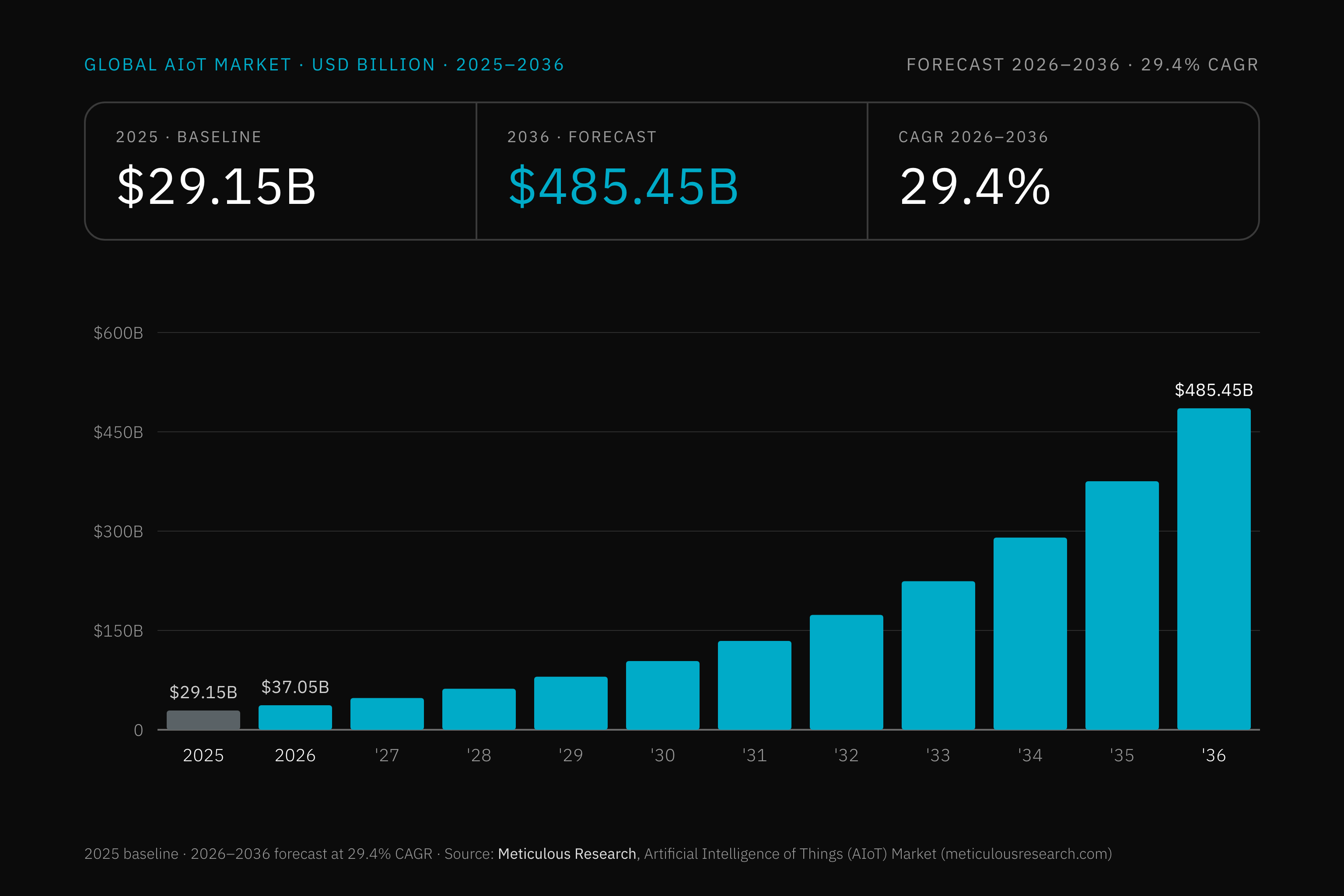
Explosive Market Growth: According to Meticulous Research, as of 2026, the global AIoT market is valued at approximately $37.05 billion. Driven heavily by AI's insatiable need for data, this market is projected to skyrocket to $485.45 billion by 2036, representing a massive Compound Annual Growth Rate (CAGR) of 29.4%.
The Autonomous Mobility Surge: Real-world applications that rely heavily on live IoT sensor data, such as autonomous mobility, are seeing the fastest sector expansion, growing at an estimated 42.60% CAGR. In their research, Mordor Intelligence also highlights how self-driving fleets require constant mileage accumulation and sensor fusion (combining data from cameras, LiDAR, and radar) to refine their AI models.
The Shift to Edge Computing: To process IoT data fast enough for AI, computing is increasingly moving to the "Edge" (processing data locally near the sensor rather than sending it to a central cloud). Edge deployments are leading growth at a 37.45% CAGR, highlighting the immediate need to connect AI algorithms directly to IoT hardware (Physical AI). Another benefit of processing data at the edge is that it saves bandwidth for data transmission, resulting in significant operative cost savings.
Ultimately, the drive toward digital transformation and AI integration has completely changed the trajectory of the IoT industry. As AI models become more complex and capable, their hunger for real-time, physical-world data will only continue to accelerate IoT deployments globally.