"Marketing, design and technology are just the pieces you build out of."
Marketing in deep tech often gets stuck behind rigid terminology and screen-bound routines. Breaking through that static requires an artisan's curiosity, a habit of building custom solutions when existing options fall short, and the grit to bring complex ideas into the physical world.
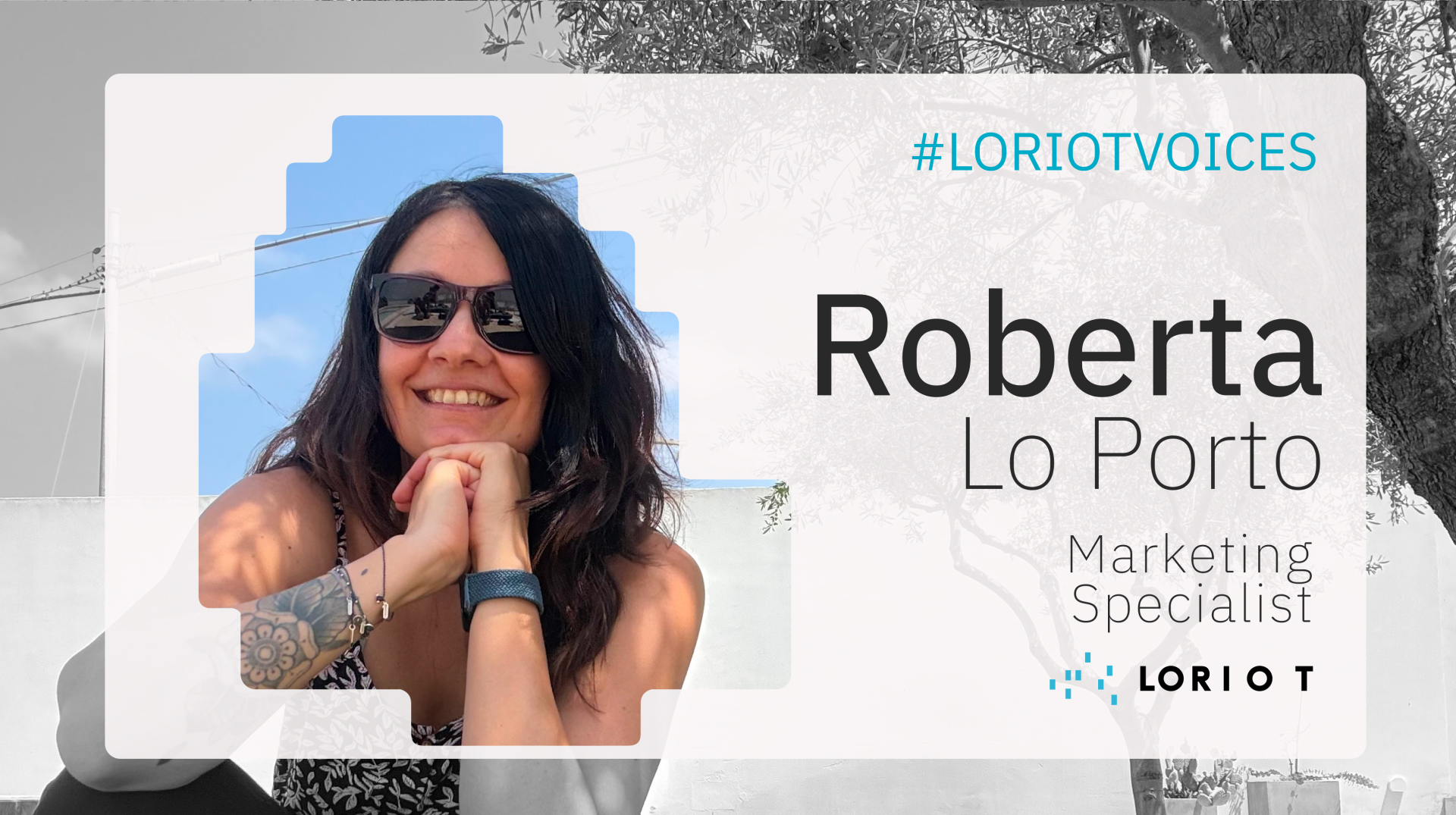
Roberta Lo Porto works as a Marketing Specialist at LORIOT and leads Event Operations for IoT Sparks ✨. She focuses on a clear question: "How do we turn this into something real?"
In this edition of #LORIOTVoices, Roberta shares her hands-on workflow, how she uses AI to bridge the gap between idea and execution, and what goes into orchestrating the physical experience of IoT Sparks.
1. Your career brings together marketing, design, technology and events. What connects such different areas for you?
I like making things, and I like understanding how you actually turn them into something real. I also love bringing people together and building experiences around that. Which is why events have kept coming back in my career, even during periods when I was working on something completely different.
"Marketing, design and technology have never felt like separate departments to me. They're just the pieces you build everything else out of."
2. How do you make someone want to read technical content?
Getting the content right starts with the technical team. Our job in marketing starts after that: making someone stop, click, and actually stay until the end.
In an industry where a lot of the communication looks the same, that can come down to decisions that seem small. We look for the format that helps each idea land: an infographic instead of two pages of text, a carousel that walks through it step by step, a black and white cover when nobody expects black and white.
An infographic that looks simple can hide a lot of hours behind it: understanding the topic, choosing what matters, ordering it, designing it. What you're really looking for is a way in, something visual that makes people curious enough to keep going.
3. What's open on your screen right now?
Figma with a half finished carousel. Webflow, with Claude Code uploading the IoT Sparks agenda. A Paper.design tab I opened a few days ago to test something and still haven't closed. And a message from Dario Maccarrone, our CMO, on Slack with a photo of something he sketched by hand, because that's the fastest way for him to show me an idea.
4. When do you decide to build something from scratch instead of using what's already out there?
When bending the way we work to fit the tool costs more than just building the tool. It's not that I like making things for the sake of it. It's that changing a process that works, only to squeeze it into software that doesn't know us, drives me a bit crazy.
That said, I overdo it fairly often. I've spent two days building something and then realised a shared spreadsheet would have done the job.
"So now I make the ugly version first and wait until someone asks for it a second time before turning it into anything real."
5. AI has changed how you work. What do you do today that you wouldn't even have attempted two years ago? And what hasn't changed?
Two years ago I wouldn't have tried to build a digital tool or a working app myself. I could picture it and design it, but then I needed someone else to develop it. Now I can start from a need, put together a first version and test it, whether that's an internal platform, an automation, or a video made in a way that simply wasn't possible before.
AI pushes me to try things I would have written off as out of my reach, and it has made the gap between having an idea and seeing it run much smaller.
"What hasn't changed is deciding whether the idea is worth it in the first place. I try a lot more things now, and I throw a lot more away."
6. You're also Event Operations Manager for IoT Sparks. What makes working on an event different from everything else you do?
There's no second version. If something breaks on a website or in a piece of content on Tuesday, you fix it on Wednesday. IoT Sparks is the 7th of October at nine in the morning, and that's that.
And then there's the other part: an event happens in a room, not on a screen. People show up tired, they're hungry, they need coffee, they want to find one specific person.
Every edition builds on the last one, and even so, most of it has to be decided again from scratch. This year we moved to a new venue, the Palau de les Arts, and that raised the level of complexity all at once. A new space means deciding everything again: where people come in, where they eat, where they talk, where someone ends up if they don't know anybody. Holding the content, the networking and the whole experience together at the same time is the part nobody sees from outside, and it's the part that takes the most work.
That forces us to work differently. You anticipate what could go wrong, you build in a margin, and you decide fast, because something you didn't plan for always happens.
"In the end it comes back to the same question: what do we need to solve so the experience works?"
That practical side is what I like most about operations.
7. Of everything you've done at LORIOT, which is the smallest project and which is the biggest one you're happy with?
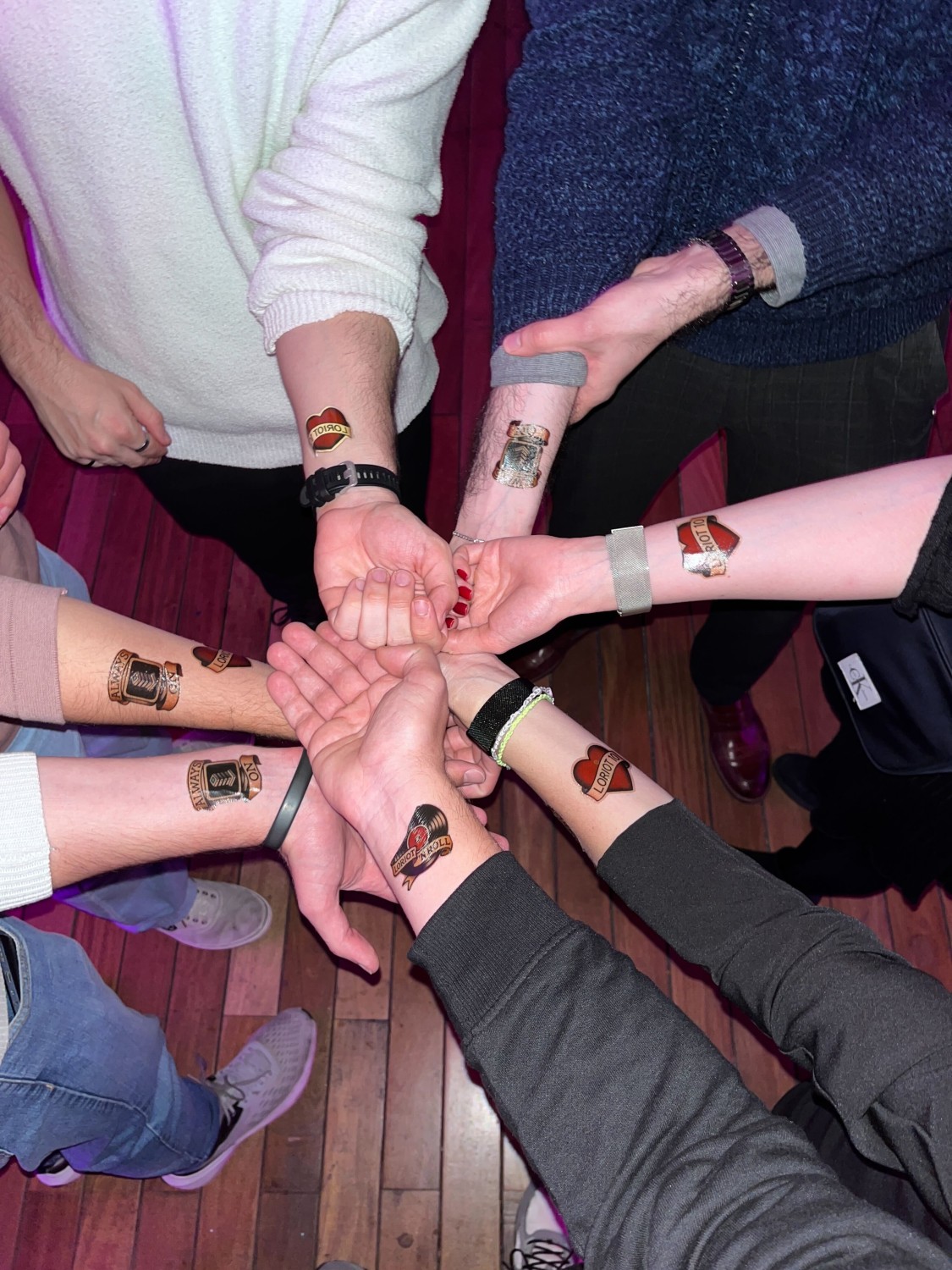
The smallest one is the vintage tattoos I made for LORIOT's tenth anniversary. Old school, printed like the rub-on tattoos you had as a kid. They lasted three days on people's arms and achieved absolutely nothing measurable, and still, it's the thing I've enjoyed making the most.
"Achieved nothing measurable, lasted three days, and still my favorite thing to make." - LORIOT 10th Anniversary vintage rub-on tattoos.
The biggest one is the sponsor portal. That project didn't start from a nice idea, it started from a mess. Every sponsor's information was scattered across emails, folders and people's memories, and it was only a matter of time before the wrong logo went to print.
8. How do you know an idea is any good?
I don't, honestly. What I do is tell Dario about it. If it comes back to me exactly the way I told it, it wasn't interesting enough. If it comes back different, it's usually because he asked me something that breaks it open somewhere I wasn't looking. Not long ago he stopped me just in time on a project. I was heading straight in one direction and he was right that it wasn't the moment.
"That conversation is the part of the job I enjoy most. On my own I build faster. With him I build better."
9. Do you keep building things after you close your laptop?
Always, although this client is a lot more demanding. My son Alex and I have made video games, cardboard prototypes and quite a few treasure hunts around the house. I love it.
Roberta's answers show how practical creativity shapes LORIOT's work: tools adapt to existing workflows, design decisions spark genuine curiosity, and live operations get built step-by-step around real human needs. Come see this work in person at IoT Sparks this October at Palau de les Arts. Leave your questions or thoughts about building workflows, AI tools, and live events in the comments below!